Radar has measured range and velocity for decades. What changed in the last automotive generation is angular resolution in two axes at once. Add horizontal and vertical bearing to the classic range/Doppler pair, and a radar stops being a proximity alarm and starts being an imaging sensor.
The chirp, and why it carries range and speed together
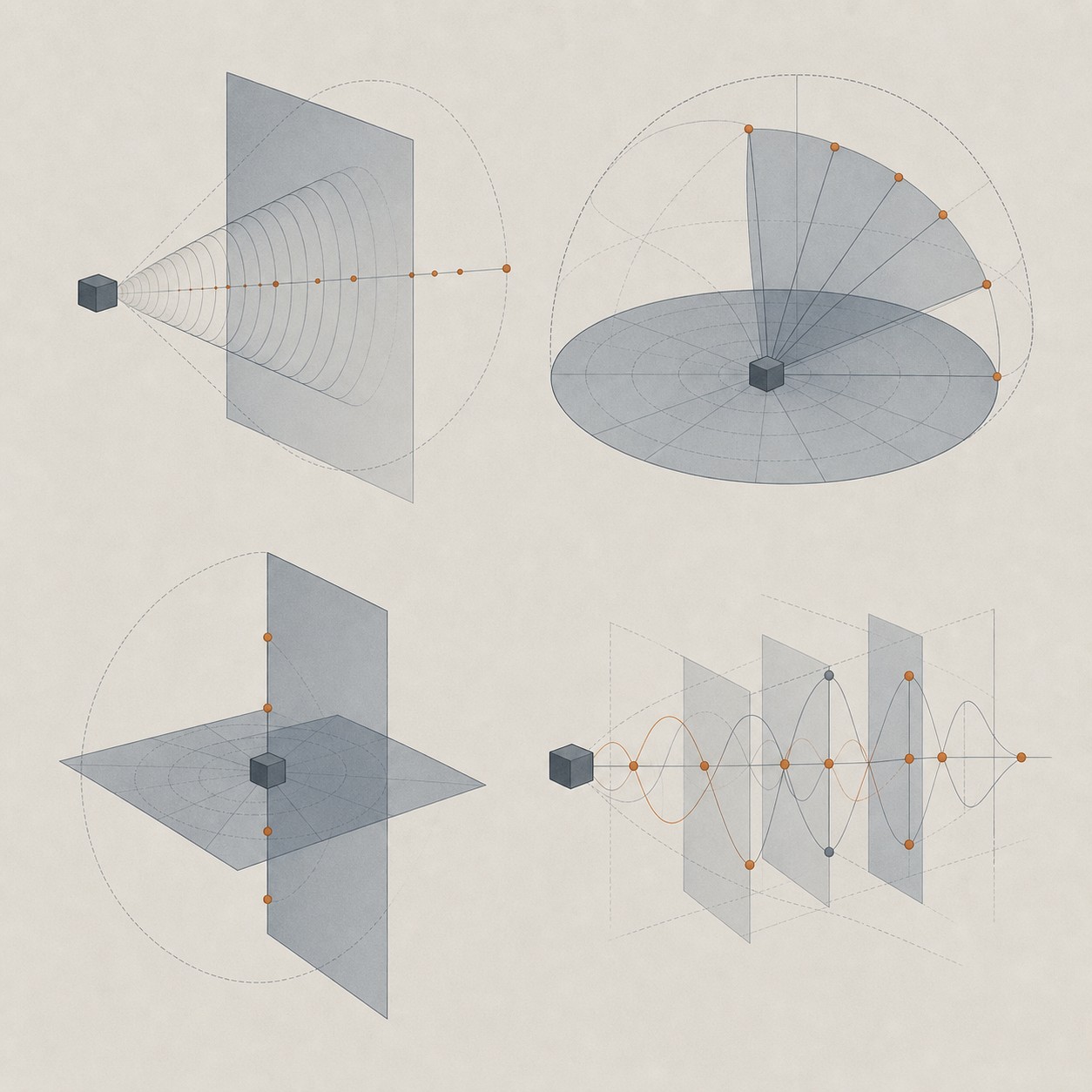
An FMCW radar transmits a signal whose frequency ramps linearly over time — a "chirp." When the echo returns, the frequency difference against the outgoing ramp encodes distance, while the phase shift across successive chirps encodes radial velocity. One waveform, two measurements. This is the foundation every 4D system builds on.
Angle: the virtual array trick
A single antenna gives you no bearing. Multiple receive antennas let you recover the angle a wave arrives from by comparing phase across the array. The key move in modern imaging radar is MIMO: by transmitting from several antennas and receiving on several more, the system synthesises a much larger virtual array than the physical one, sharpening angular resolution without a proportionally larger chip.
- More virtual channels → finer separation of two objects at nearly the same angle.
- A 2D antenna layout → both azimuth and elevation, which is what makes it "4D".
- The point cloud gets dense enough to suggest an object's extent, not just its presence.
From returns to a point cloud
Raw echoes are transformed — range FFT, Doppler FFT, then angle estimation across the virtual array — into a set of detections, each carrying position and velocity. Downstream, clustering and tracking turn that cloud into objects with identity and trajectory over time. Much of this is on-chip signal processing, which is a large part of what distinguishes one radar SoC from another.
How it sits next to lidar and cameras
No single sensor wins everywhere, which is why serious perception stacks fuse them:
- Camera — rich texture and colour, best for classification; weak in fog, glare and darkness, and infers depth indirectly.
- Lidar — dense, precise 3D geometry; strong shape sensing, but costlier and more affected by heavy precipitation and dust.
- 4D imaging radar — direct range and velocity, robust in bad weather, lower cost per unit; coarser angular detail than lidar, so it complements rather than replaces it.
What lives inside a radar module
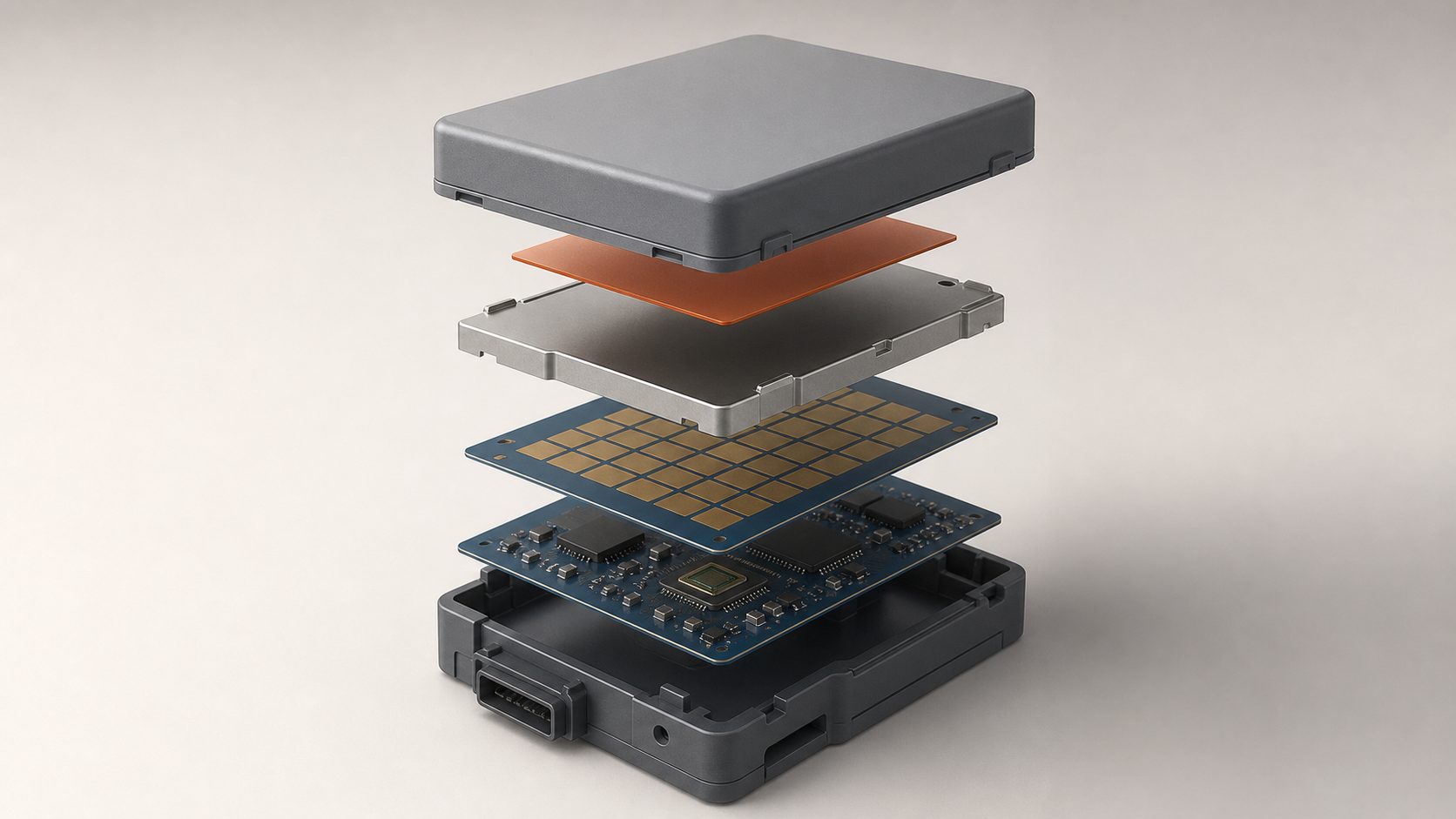
A front-end chip never ships alone. A typical corner- or front-radar module stacks a radome, an antenna board, the RF/processing PCB and a shielded housing — the anatomy below is a generic, anonymised illustration of that stack, not any specific product.
The hard parts
The engineering difficulty in this category is real and worth stating plainly:
- Packing enough virtual channels for useful angular resolution while managing power and thermals.
- Suppressing clutter and multipath so a guardrail reflection isn't mistaken for a vehicle.
- Doing enough processing on-chip to keep the data rate and latency workable for a moving platform.
- Meeting automotive reliability and qualification expectations across temperature and lifetime.